
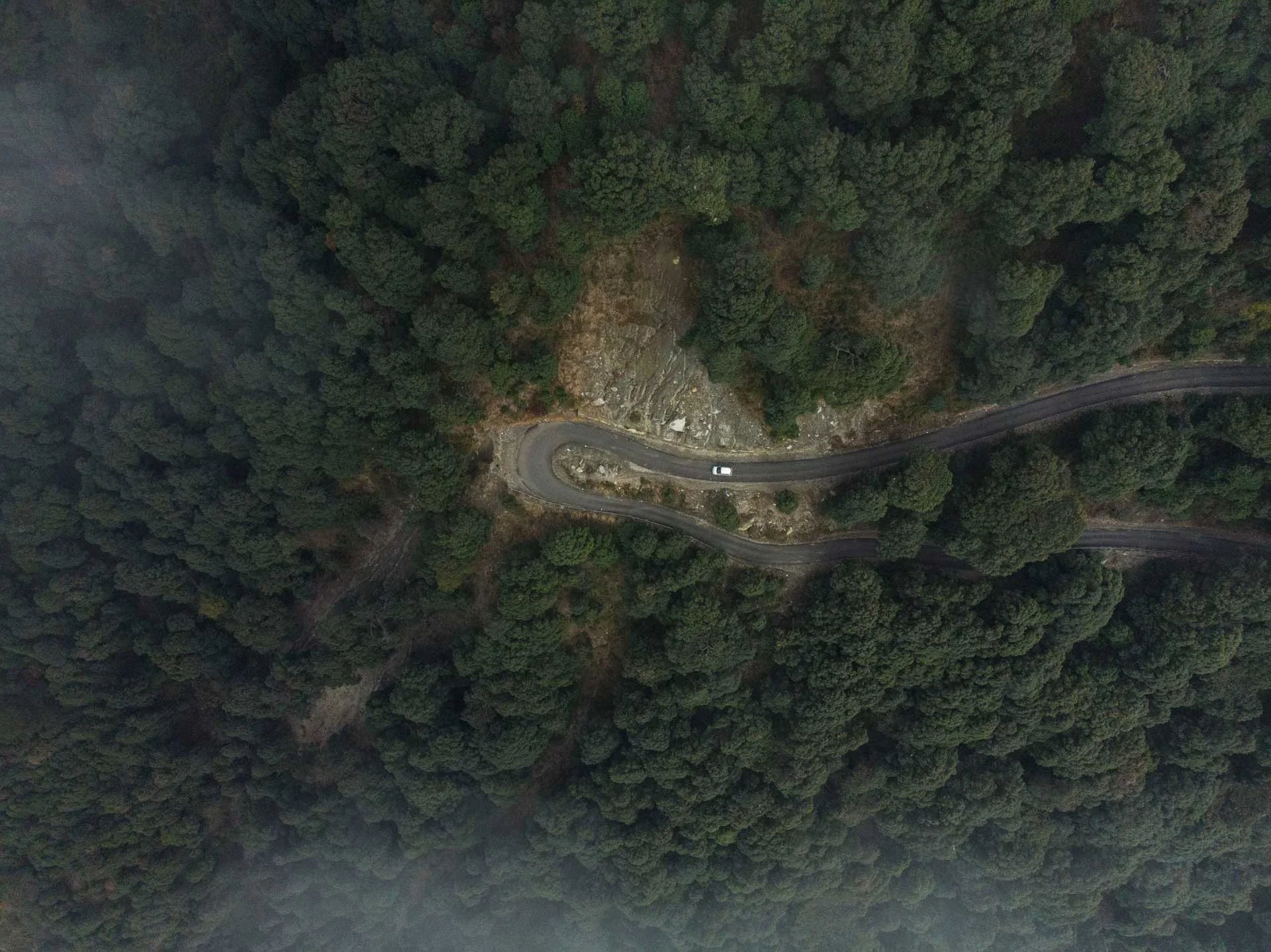
Every hill road has a story
Sit at any dhaba in Himachal after dark and ask about the road ahead. Someone will have a story. A bend where cars stop for no reason. A figure standing in the fog who is gone by the time the headlights reach it. Lights moving on a hillside where no village stands.
Are the stories true? Some are unbelievable. But the mountains at night are a strange and beautiful place, and nature is so. Here are the tales you are most likely to hear on a night drive in the hills, and what we think is usually behind them.
The Jognis of the high pastures
The old stories of the Kullu and Lahaul valleys are full of Jognis, spirits of the high places. They are said to love the flowering pastures up in the mountains, and to leave them only when the snow covers the grass. Some are worshipped as guardians of the valley, with small shrines of their own; the waterfall above Vashisht in Manali still carries their name. Others, the shepherds say, can bewitch a traveller who wanders where he should not.
So when a pahadi grandmother tells the children not to stray into the forest after dark, she is not only worried about leopards.
The shrines at the bends
Drive any mountain highway and you will pass small shrines by the roadside, often at a sharp bend or an old landslide spot, with a red chunni and a bell tied to the railing. Many travellers stop for a moment, bow, leave a coin, or give a short honk as they pass. For some it is a prayer for a safe road. For others, it is a polite hello to whatever looks after that corner of the mountain.
For years, almost every driver on the old road from Mandi to Kullu stopped for a minute at Hanogi Mata’s temple, high above the Beas, to pray for a safe journey. The new four-lane tunnels now take the highway past it, but ask anyone who drove that road for long, and they will remember the stop.
The lady on the lonely bend
Every highway in India has its own version of this one. Late at night, on an empty stretch, a woman in white stands by the road and waves for a lift. Stop, and there is nobody there. Or she gets in, says nothing, and at the next village the seat is empty. The details change from valley to valley, a bridge here, a bend there, an old rest house, but the story travels wherever drivers do.
Every driver has heard it. Most tell it with a grin.
What is usually behind them
Most mountain mysteries have a natural answer. Fog rolls up a valley in minutes and takes the shape of whatever your mind is thinking about. Two green eyes shining in the headlights are a fox, a jackal, or now and then a leopard crossing the road; the Kangra hills have all three. A light moving on a far hillside is a shepherd’s fire, or a villager walking home with a torch. A voice in the valley is the river, or an echo coming off the rocks.
Unbelievable, yes. But nature is so. And honestly, a leopard walking calmly across the road in your headlights is a far better story to take home than any ghost.
Old warnings in new clothes
Listen closely and many ghost stories are really safety rules in costume. Don’t wander into the forest after dark: leopards hunt at night. Don’t cross the stream after the rain: the water rises in minutes. Don’t sleep on the high pasture when the clouds come in: the weather turns fast up there. The hills taught these lessons long before there were road signs, and a good story made sure the children remembered them.
Why the hills feel different at night
Drive a mountain road after dark and the whole world shrinks to the circle of your headlights. The engine hums, the river below sounds twice as loud, and the smell of pine and woodsmoke comes in through the window. Across the valley, the lights of a village hang in the black like a string of diyas.
Stop the car for a minute on a clear night, switch off the lights, and look up. The stars over the Kangra hills are something city people forget exists, and on a moonless night you may even see the Milky Way. It is easy to see how the old stories were born on nights like this.
Our drivers’ reaction? None.
Ask our drivers about the ghost stories and they will just smile. They grew up on these roads, and they don’t think about it. What they do respect is the fog.
When fog comes down on a mountain road, they slow right down, switch the hazard lights on, and follow the white line at the edge of the tarmac. No overtaking, no hurry, no heroics. That is the real secret of a safe night in the hills.
Rain, snow or a landslide warning, they take seriously, and they will tell you honestly if a road should wait until morning.
How we drive at night
Airport and station runs happen at any hour. If your flight lands late at Gaggal, or your train reaches Pathankot or Amb Andaura in the middle of the night, we are there waiting. We track flights, and there is no extra charge if yours is late.
Long hill drives are different. For Manali, Shimla, Chamba and beyond, we prefer to leave early and travel by daylight. Not because of the Jognis, but because the roads are safer, the views are better, and you should see the mountains you came all this way for.
If you do travel at night
Most of our night journeys are short airport and station runs, and they are easy. A few simple things help. Keep a warm layer handy, because the temperature drops quickly after dark in the hills. Keep water and a snack in the car. If you are sleepy, sleep; your driver does not need company to stay sharp.
And never ask a driver to hurry at night. A few extra minutes on a dark mountain road cost nothing. Ours won’t rush anyway.
Ask your driver about the stories on the way. He will probably just laugh.