
After the lanes, the open sky
A few days in McLeodganj and Dharamkot fill you up: the Dalai Lama temple, the steep lanes of cafés and bookshops, the walk to Bhagsu, maybe the trek to Triund. It is wonderful, and it is busy. Somewhere around day three, many travellers start wanting something quieter and wider.
That is Bir. A couple of hours east of Dharamshala, it is a small Tibetan settlement at the foot of the hills, with tea gardens around it and a sky full of paragliders. After the narrow lanes of McLeodganj, it feels like someone has opened a window.
The flight everyone talks about
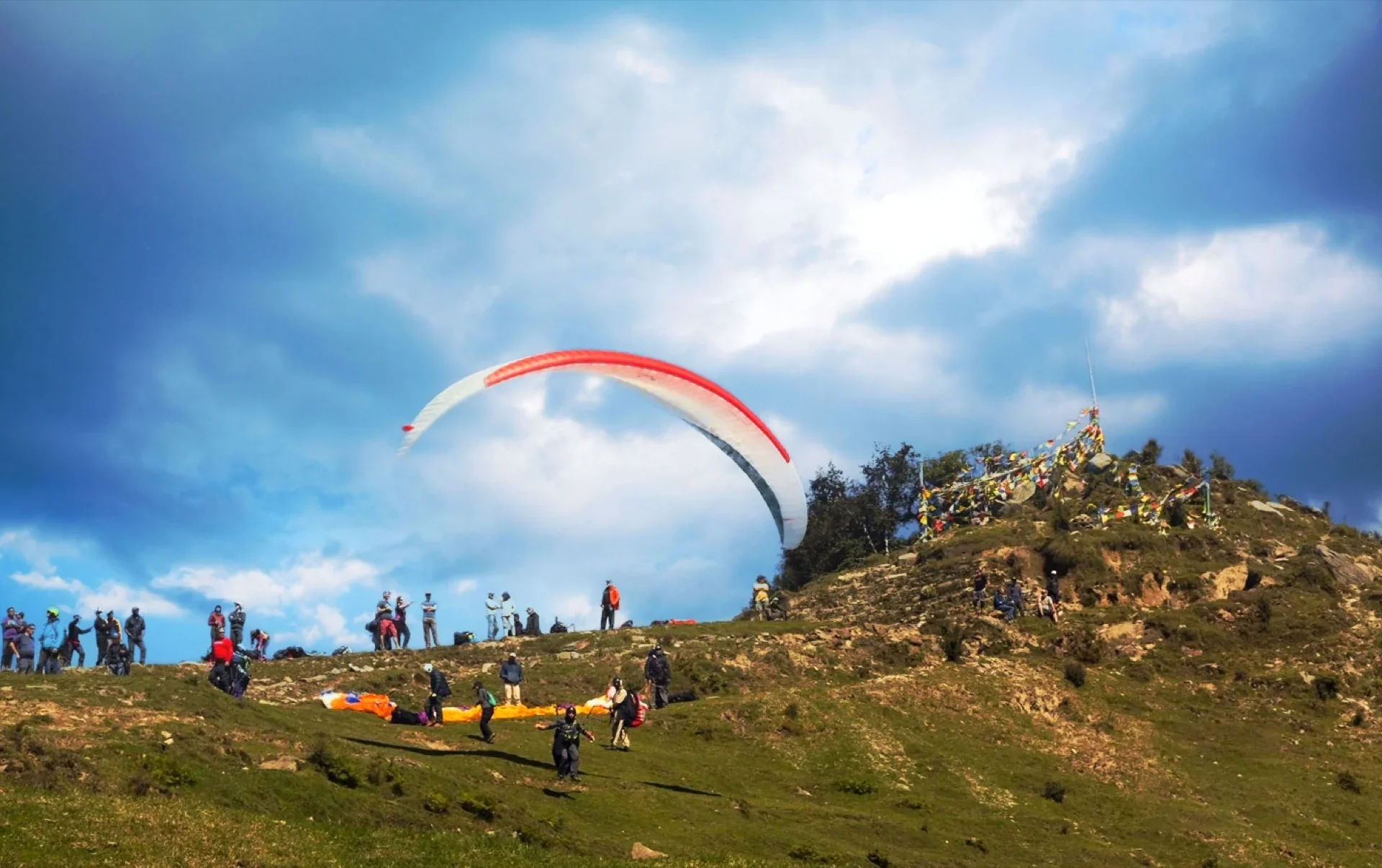
Bir Billing is India’s best-known paragliding site, and one of the finest in the world. You take off from Billing, high on the ridge above, and glide down over forests, villages and tea gardens to the landing ground at Bir. A tandem flight with a trained pilot needs no experience, just the nerve to run a few steps off the hill. Depending on the wind and the flight you choose, you are usually in the air for somewhere between fifteen and thirty minutes.
We drop you at the Billing take-off and wait for you at the landing ground, so you never have to sort out the road part yourself. Flights run best in the morning, when the wind is right, so we start early. Flying pauses during the monsoon months, and the pilots cancel whenever the weather is not safe. Our Bir Billing paragliding tour covers the whole day.
When to go for the flight
The clearest flying days usually come in autumn, from October to November, and again in spring, from March to May. Winter days can be crisp and beautiful, though cold up at the take-off. In the monsoon, flying stops completely.
Whatever the season, the wind decides. If the pilots say the air is not right, wait for the next window, or try again the next morning. A pilot who cancels is worth more than one who doesn’t.
What to wear and carry
Wear closed shoes with a good grip, because you have to run a few steps at take-off. Carry a light jacket even on a warm day; it is cooler up at Billing, and cooler still in the air. Sunglasses, sunscreen, and a strap for your phone if you want to film. Eat light before you fly.
Fly only with a registered operator and a certified pilot, and don’t choose on price alone. Your driver will be waiting at the landing ground either way.
Even if you never leave the ground
Not everyone wants to fly, and Bir is still worth the trip. Sit at the landing ground in the afternoon and watch the gliders come down one by one, bright wings against the green hills. Walk through the Tibetan colony, past prayer flags and quiet monasteries. Visit Sherab Ling, a large monastery set in the forest a little way from Bir, and sit in its silence for a while. Stroll between the rows of the tea gardens as the light goes gold.
Bir is slower than McLeodganj. The cafés are relaxed, the evenings are calm, and nobody is in a hurry. That change of pace is exactly why so many travellers add it at the end of their Dharamshala days. Even a single evening here changes the rhythm of a trip.
A slow afternoon in Bir
After the flight, or instead of it, give Bir an unhurried afternoon. Have a long lunch at one of the cafés near the landing ground or in the colony. Browse the small shops for Tibetan handicrafts and prayer flags. Visit the Deer Park Institute, a quiet centre for study and meditation, or simply sit with a book in the sun while the gliders keep coming down.
This is the part of Bir people remember later. Not a checklist, but an afternoon when nothing needed to happen.
The drive is part of the day
The road from Dharamshala to Bir runs through the best of the Kangra valley. The tea gardens of Palampur roll past the window. Andretta, the old village of artists and potters, is a short detour. And just before Bir comes Baijnath, with its 800-year-old Shiva temple and the famous story of why the town has no goldsmith. Read it before you go; it makes the stop twice as interesting.
Tell us what you would like to see on the way, and we plan the stops around it.
Bir for everyone in the group
Bir is easy for elders too. The landing ground is flat, the monasteries are a short drive away, and the cafés are relaxed. Parents who don’t want to fly are often happiest on a bench with a cup of chai, watching the gliders come in while the young ones go up the hill.
Friends looking for a little more adventure can camp near Billing for the night, catch the sunset from the ridge, and fly the next morning. Families with children can make a picnic of the landing ground. Everyone finds their own Bir.
A long day, or one easy night
You can do Bir as a long day from Dharamshala: leave early, fly in the morning, lunch in Bir, a monastery in the afternoon, and back by evening. It works, and plenty of people do it that way.
But if you can, stay one night. The sunset at the landing ground, a slow dinner, a sky full of stars, and a morning with no alarm: that is when Bir really works its magic. We drive you back the next day, or on to your next stop. Both work well; you choose. Couples, especially, should read why Bir is made for evenings.
Going further from Bir
Bir also makes a good last stop before you leave the Kangra valley. From here the road carries on towards Mandi and Manali, so many travellers fly at Bir and then continue to Manali with the same car and driver. It works the other way round too: fly at Bir on your way in from Manali, and finish your trip in Dharamshala. Tell us your whole plan, and we quote it as one all-in trip.
And if you want to go deeper into the hills, the quiet valley of Rajgundha lies just over the ridge from Billing. For a simple drop, see our Kangra to Bir Billing taxi.