
Why everyone is suddenly talking about Rajgundha
A few years ago, hardly anyone outside the valley had heard of Rajgundha. Then the reels started. A green valley with a river running through it, old wooden houses, tents under a sky full of stars, and mountains standing close on every side. Suddenly everyone wanted to know where it was.
Rajgundha is a small village deep in the hills of Kangra district, in the valley behind the Billing ridge, reached by road through Barot. It is not a hill station with a mall road and a row of hotels, and that is exactly why people love it.
Still untouched
What makes Rajgundha special is what it doesn’t have. No traffic jams, no crowds, no loud music. Just wide meadows, a clear river, a handful of village homes, and the mountains all around. You can walk for an hour and meet more cows than people. In spring the meadows turn green, and in autumn the light goes golden and the air turns crisp.
It is the Himachal many people come looking for, and never quite find in the busy towns. “Go now,” says Arvind, who runs Nandini Travels from the Kangra taxi stand. “Places like this don’t stay quiet for long.”
Campfires, and a sky full of stars
Most visitors stay in tents or simple homestays. Evenings are for a bonfire and a hot meal, and nights are for the sky. With no town lights anywhere near, the stars are so thick it is hard to go to sleep. On a clear, moonless night, step away from the fire for a few minutes and let your eyes adjust; you may see the Milky Way stretched across the valley.
Phone network is weak or missing in much of the valley. For many people, that turns out to be the best part: a real break, with nobody able to reach you except the person sitting next to you at the fire.
Barot on the way
The drive to Rajgundha runs through Barot, a quiet valley town on the Uhl river, and it is worth slowing down for. The river is known for its trout, and Barot has an unusual piece of history: its reservoir was built as part of a British-era hydel project, one of the oldest in the country, and you can still see the old works along the valley.
Stop for lunch by the river before you go up. Walk along the reservoir, look in at the trout farm, and look for the old haulage trolley line that once pulled men and material up the mountain for the power project. It makes the day feel like a journey, not just a transfer.
Getting there, and when to go
Yes, you can go by taxi. Our cars drive to Rajgundha by road through Barot, and outside the monsoon the road is good all year. In the monsoon months, heavy rain can break the road in places, so that is the season when we check most carefully before we set out. The last stretch is narrow in places, so it helps to have a driver who has done it before.
Mountain weather changes fast, so before any trip we tell you honestly how the road is that week. If it isn’t safe, we will say so, and suggest another plan. We also leave early, so you reach the valley with plenty of daylight to spare.
Pack warm clothes even in summer. Nights in the valley are cold, and in winter, very cold.
What to do there
Very little, and that is the point. Walk the meadows. Sit by the river with your feet in the cold water. Read in the sun, nap in the grass, and wait for the stars. In the warmer months you may meet Gaddi shepherds moving their flocks through the valley, on routes their families have used for generations.
Serious trekkers use Rajgundha as a stop on the way to the Thamsar Pass and Bara Bhangal, one of the hardest treks in these hills. If that is you, plan it with a local guide. The rest of us are happy just to sit still.
What to carry
Warm layers, even in summer, and a proper jacket after September. A torch, because the nights are properly dark. A power bank, since electricity can be patchy. Some cash, because cards and UPI need a network that may not be there. And basic medicines, since the nearest chemist is back down the valley. Download your maps and music before you leave Barot, and tell your family you may be out of reach for a day or two.
Who Rajgundha is for
Rajgundha is for friends who want to camp, couples who want quiet, and families with older children who love the outdoors. It is not for someone who needs room service, a lift and a shopping street. Food is simple and hot: dal, rice, rajma and rotis, cooked by the families who host you. If you want fresh trout, have it down in Barot on the way.
How long to stay
One night is enough to see Rajgundha. Two nights are enough to feel it. The first evening you are still in city mode, reaching for a phone that has no signal. By the second, you have forgotten where you left it.
Pair it with Bir
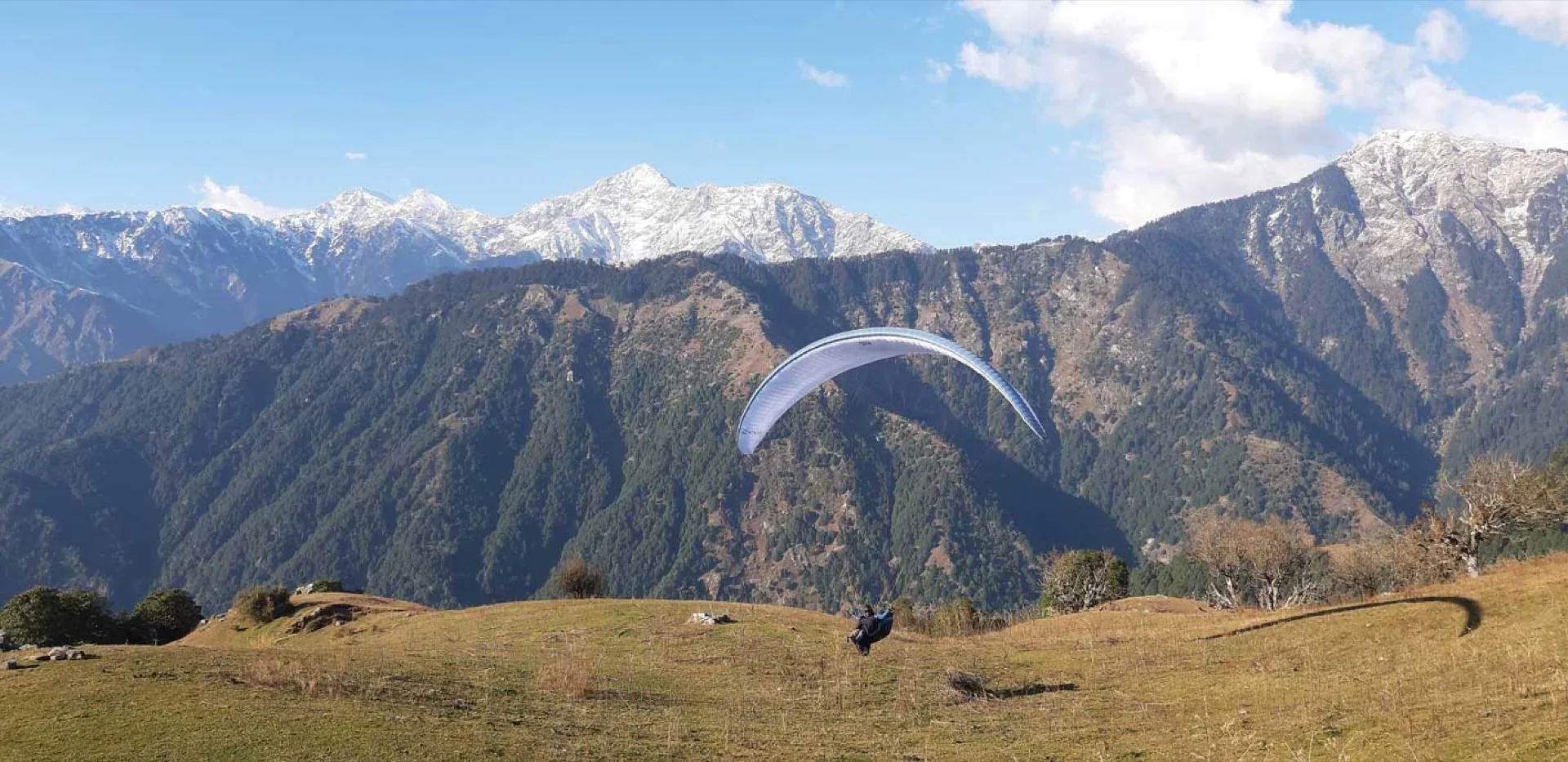
Rajgundha and Bir sit on either side of the same ridge, so they make a natural pair. Spend an evening in Bir for the sunset and the paragliders, then drive round through Barot for a night or two in Rajgundha. Or do it the other way round: come down from the quiet of the valley into the easy cafés of Bir. Either way, the drive between them, through Barot and the forests, is part of the fun.
Read why travellers add Bir to a Dharamshala trip and why Bir is made for evenings, or see our Bir Billing tour.
Leave it as you found it
Rajgundha is famous now, and places like this can change quickly. Carry your plastic back down with you, keep the music low, and let the valley stay the way the reels showed it. If a family hosts you, eat what they cook, and ask before you photograph their home or their children. The families who live there will thank you, and so will the next traveller.